
Last updated November 22, 2026
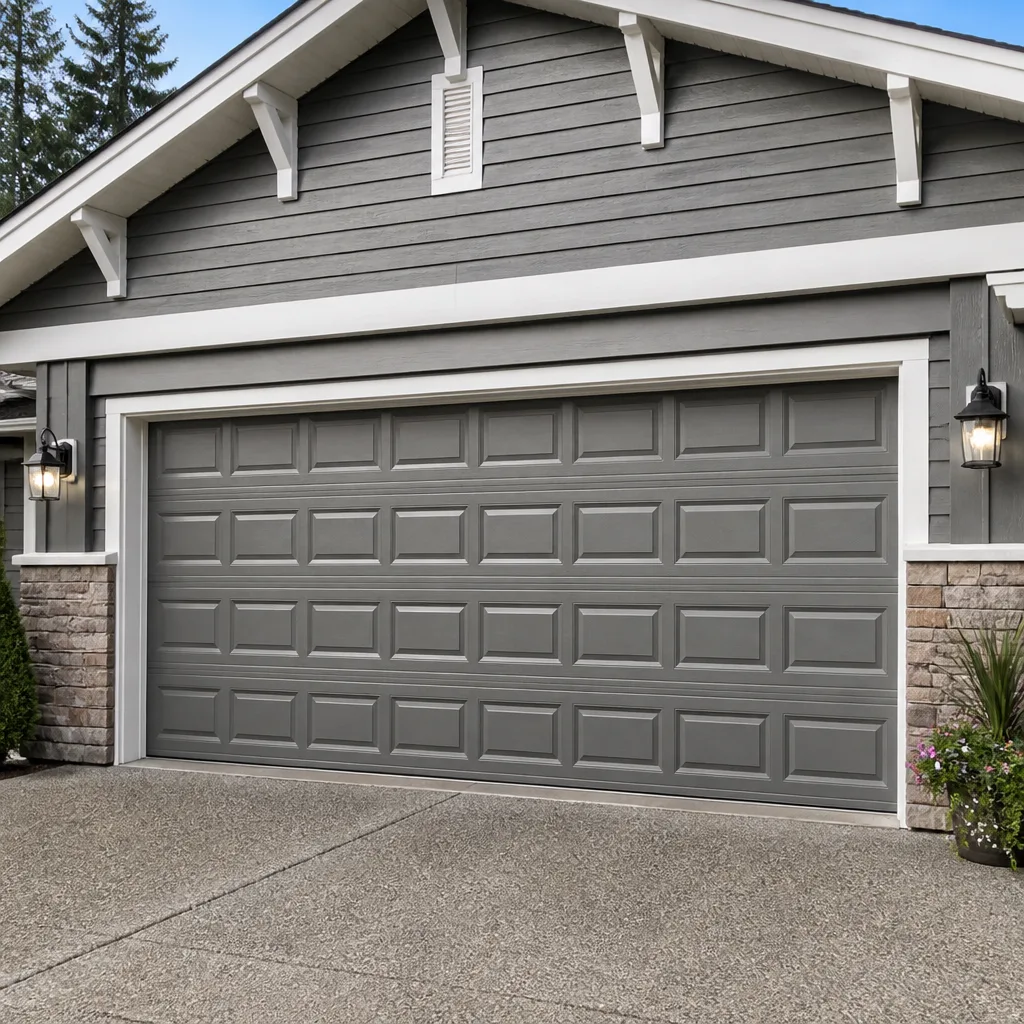 Raised-panel steel
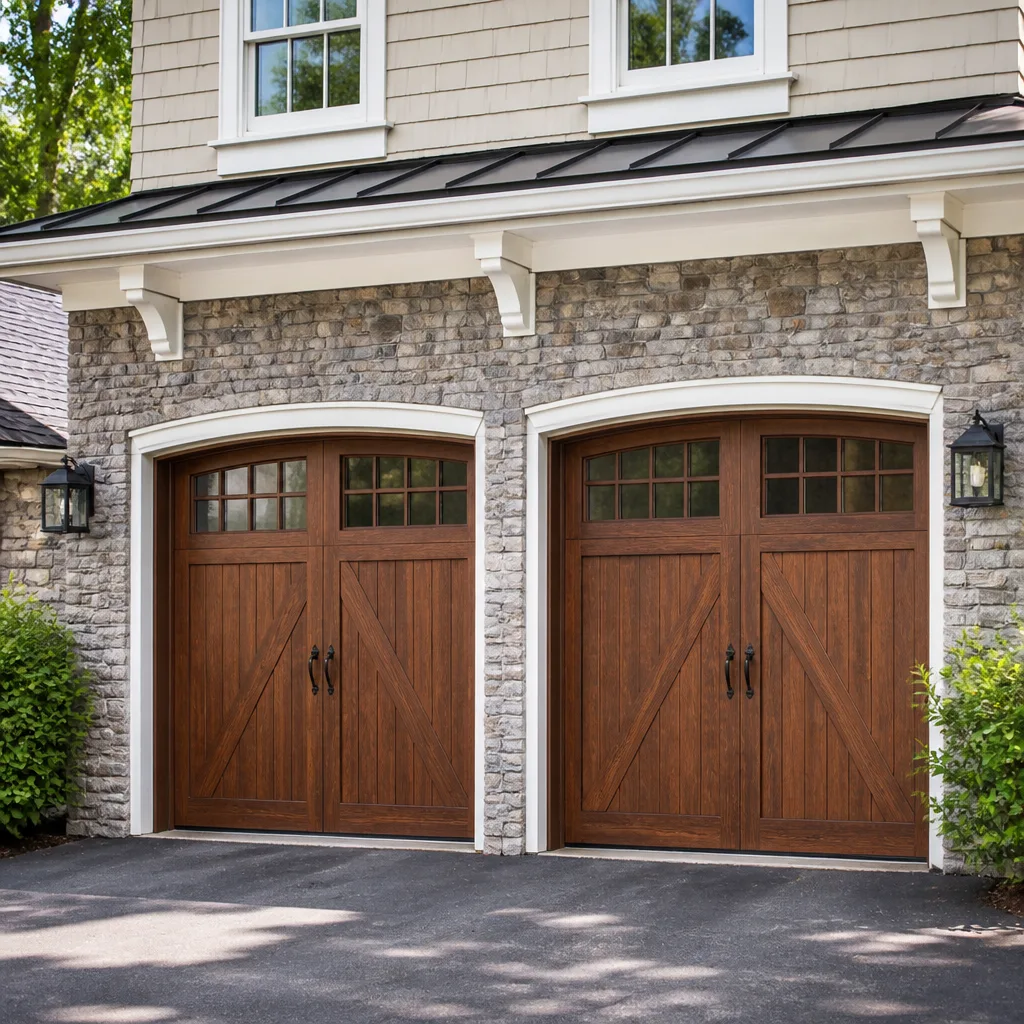 Carriage house
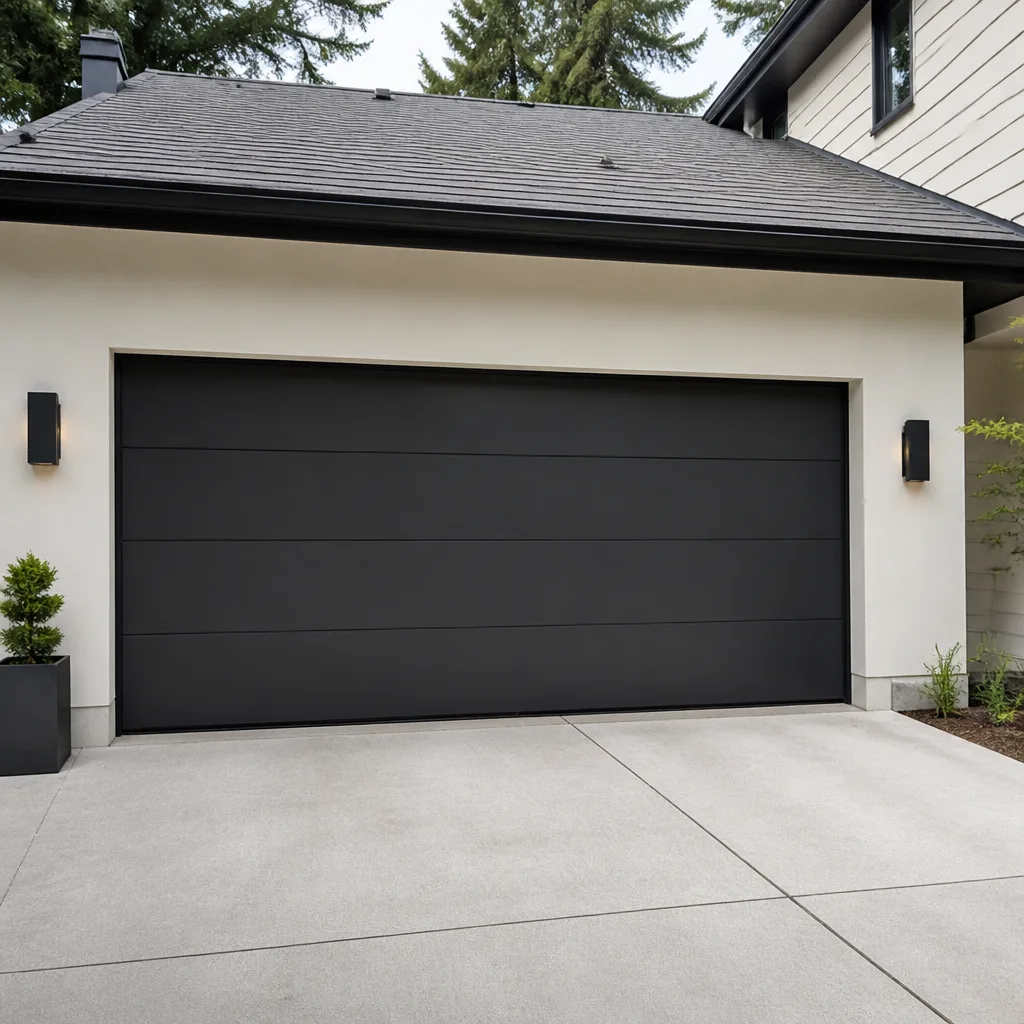 Modern flush
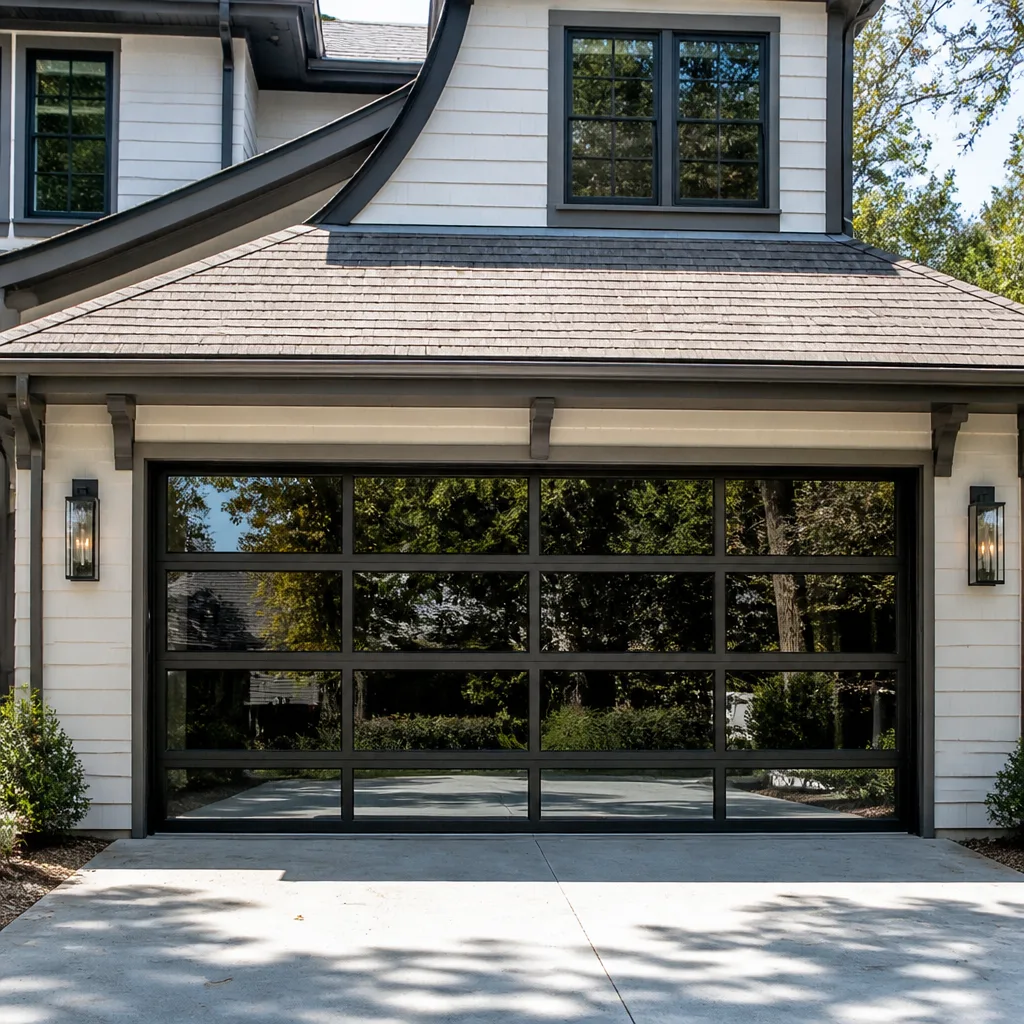 Full-view glass
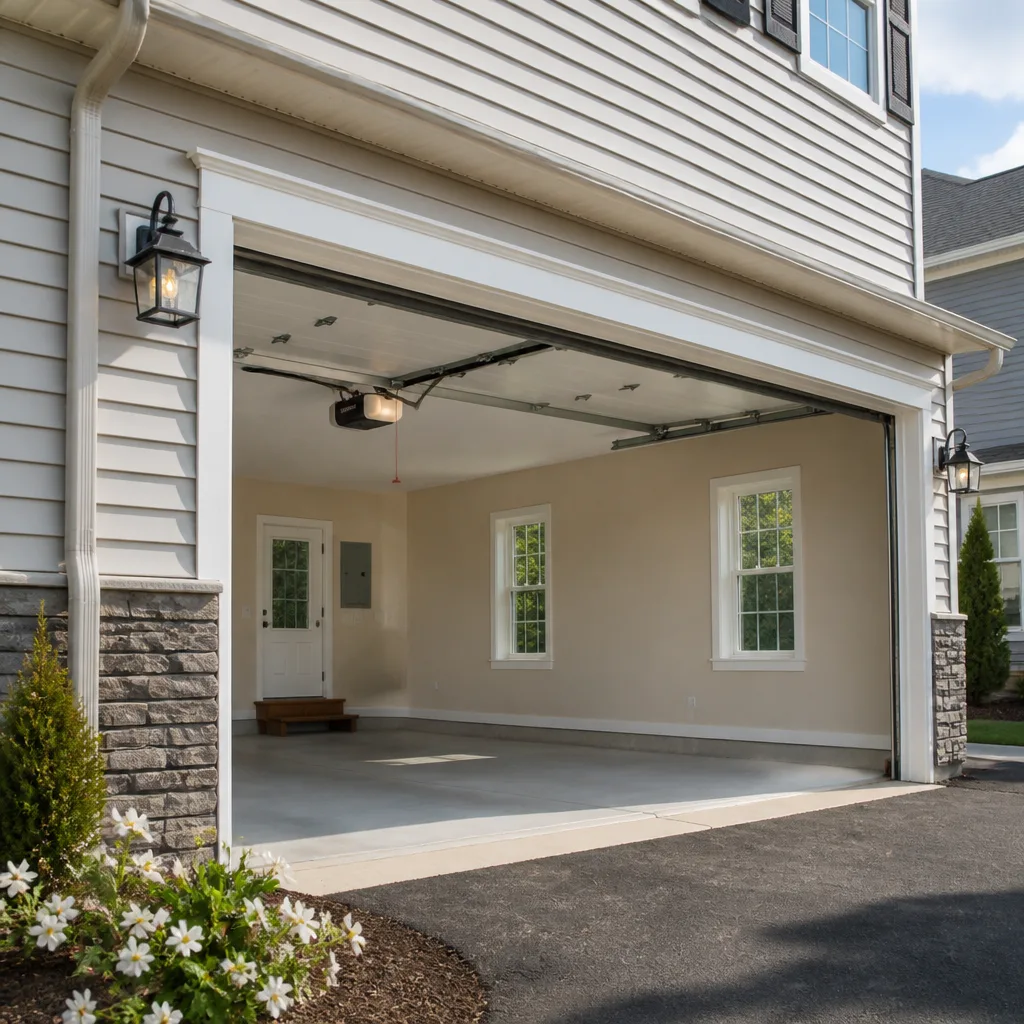 LiftMaster openers
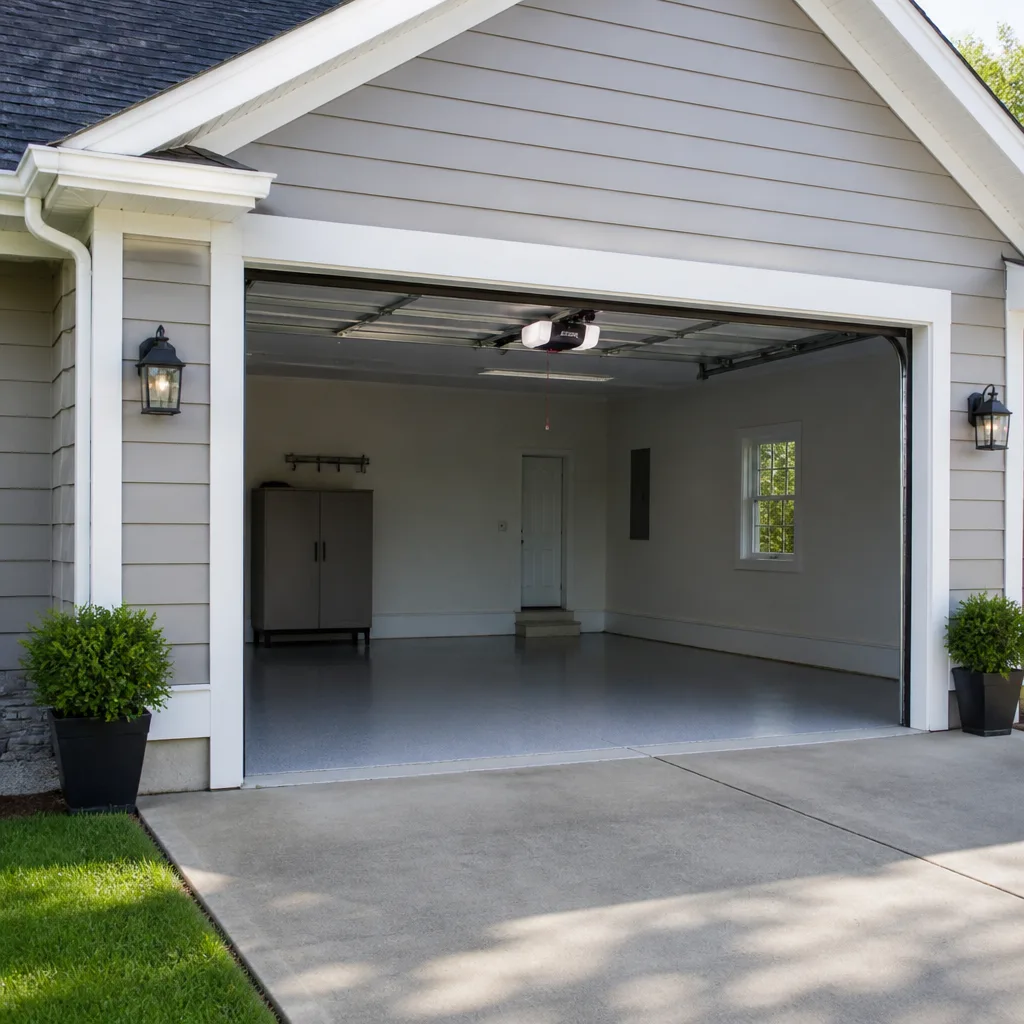 Chamberlain openers
Full 25-point door and opener safety check with every visit - springs, cables, rollers, tracks, and your LiftMaster or Chamberlain opener included
You get a price before we start. It does not change when the pro arrives.
Get your free estimateGarage Door Warning Signs: A Green Valley Ranch Homeowner’s Reference Guide
A garage door that hesitates for half a second before it moves isn’t a personality quirk. It’s a spring that’s losing tension, and a torsion spring only has so many cycles in it before the metal fatigue wins. That little pause is the door telling you it’s near the end of its life, and most homeowners ignore it until the door won’t open at all. In this guide, we’ll walk through the sounds, movements, and visual clues that signal a failing garage door, explain what each one means at the component level, and separate the warnings that give you weeks to plan from the ones that mean you should stop using the door today. This matters everywhere, but Green Valley Ranch‘s dry air and big temperature swings put specific stress on door hardware you’ll want to understand.
Quick Answer
The most reliable garage door warning signs are grinding or popping sounds during travel, a door that hesitates before moving, rust streaks or gaps on the torsion springs, a door that sags on one side or reverses mid-travel, and an opener that runs without moving the door. Any of these means the door needs an inspection. Some signals let you schedule repair on your timeline; others mean you should stop using the door immediately for safety.
Styles & brands we work with
- Raised-panel steel
- Carriage house
- Modern flush
- Full-view glass
- LiftMaster openers
- Chamberlain openers
Table of Contents
- What Your Garage Door’s Sounds Are Telling You
- Reading Spring Rust and Cable Wear
- Movement Problems: Sagging, Uneven Gaps, and Reversals
- Opener Behavior Flags: Sensor vs. Drive vs. Motor
- The Danger Window: When to Stop Using the Door
- What You Can Check vs. What Needs a Technician
- Why Green Valley Ranch Weather Accelerates Wear
- A Simple Monthly Walk-Around Checklist
What Your Garage Door’s Sounds Are Telling You
Noise is the first thing most homeowners notice, and each type of sound points to a different component. A garage door is a mechanical system with springs, rollers, hinges, bearings, and cables, and every one of them fails with a distinct sound. Here’s how to translate what you’re hearing.
- Grinding: Usually metal-on-metal contact from worn rollers or dry bearings. The door is dragging instead of rolling smoothly, which loads the springs and opener motor more than they were designed for.
- Popping: Often the torsion spring catching on itself, or a loose cable jumping its drum. Popping during travel is a strong sign of a spring problem.
- Scraping: The door panel is rubbing against the track, or the track has been bent and is out of alignment. Scraping also happens when hinges work loose and panels tilt into the track.
- Squealing: Typically a dry roller bearing or a metal roller that has worn through its housing. Squealing is often the easiest fix but the most ignored.
The timing of the sound matters as much as the sound itself. A grind that happens at the start of travel often points to the opener’s drive gear or the spring tension. A scrape that happens at a specific point in the door’s path usually means a damaged section of track. In our experience working on doors across Green Valley Ranch, the sound pattern tells the technician where to look first, which is why we ask homeowners to describe exactly when the noise happens on the call.
One important caution: if you hear a loud bang from the garage, followed by the door not opening, that’s often a torsion spring that has snapped. Stop there. Don’t try to force the door. A broken spring means the full weight of the door is unsupported, and the safer route is a professional repair.
Reading Spring Rust and Cable Wear
Springs are the most dangerous part of a garage door system, and they also give the clearest visual warnings of failure. A torsion spring is a tightly wound coil of steel under constant tension. Over time, that steel fatigues, and the metal starts to show it before it breaks.
- Rust streaks along one section of the coil: Not cosmetic. Localized rust usually means the coating has worn off that area and the metal is thinning. This is where the spring is most likely to fail.
- Surface rust spread evenly across the whole spring: Often cosmetic, especially given the rust levels in a dry climate. Still worth having inspected, but less urgent than a single rust band.
- A visible gap in the coil: A broken spring. This is not a warning sign, it’s a failure. Stop using the door.
- Cable kinked or bunched: Cables should run straight and taut along the sides of the door. A kink, a fray, or a cable that’s jumping off the drum is a serious safety issue, because a cable failure lets the door drop unexpectedly.
The spring is the piece most likely to be the cause of a door problem. On a standard residential door, a torsion spring is cycled twice every time you open and close the garage. If you leave and return twice a day, that’s roughly 1,460 cycles a year. Springs are rated for a set number of cycles, and a heavily used door in a busy Green Valley Ranch household can reach that limit faster than the homeowner expects.
Rust checks take seconds. Stand in the garage with the door closed and look up at the torsion bar above the door. If you see a single bright band of rust on one side of the coil, or a visible gap, that’s your answer. The spring assembly is under extreme tension, so never try to adjust or replace it yourself. Replacing a torsion spring is one of the few garage door jobs where the risk to an untrained person is genuinely severe.
Movement Problems: Sagging, Uneven Gaps, and Reversals
A door that moves wrong is telling you something is out of balance, and imbalance always puts extra load on the opener. Here’s how to read movement problems and what each one points to.
- Door sags on one side. Usually a stretched or broken spring on that side, or a cable that’s slipped. Torsion systems run on a single spring or a matched pair; extension systems run two separate springs. Either way, a sag means you need a technician to check balance and spring tension.
- Uneven gap at the floor. The door is closing but one corner doesn’t meet the floor. This is often a track alignment issue, a bent panel, or the door being out of level. An uneven gap lets in water, dust, and pests, and in a dry climate it also lets in the grit that wears rollers.
- Door reverses mid-travel. The opener thinks something is in the way. It could be a sensor issue, a misaligned track, or binding rollers. The door isn’t necessarily dangerous, but the pattern points to something that needs adjustment.
- Door won’t stay up when opened by hand. This is a balance test. A well-balanced door should stay in place about halfway open. If it drops or rises on its own, the spring tension is wrong and the opener is doing work it wasn’t designed to do.
The balance test is the single most useful check a homeowner can do safely. Disconnect the opener (most have a pull cord), lift the door halfway by hand, and let go gently. A door that stays put is balanced. A door that sinks or climbs is not. If you’re not comfortable lifting the door, skip the test and call a technician. Either way, an unbalanced door loads the opener motor and drives up the risk of an opener failure next.
We work on all of these problems as a routine part of garage door repair, and in most cases the fix is a spring adjustment or replacement rather than a whole new door. That distinction matters when you’re deciding whether to call.
Opener Behavior Flags: Sensor vs. Drive vs. Motor
When the opener misbehaves, the first job is to figure out which of three systems is at fault: the safety sensors, the drive mechanism (rail, chain, belt, or screw), or the motor itself. Each one fails differently, and the symptoms are usually distinct enough to narrow it down.
- Wall button lags or needs a firm press: Usually a wall control or wiring issue, not the motor. Sometimes a loose connection behind the button.
- Remote range shrinks: Weak remote battery, interference from LED bulbs or a new appliance nearby, or a failing receiver board in the opener.
- Motor runs but the door doesn’t move: Either the drive gear has stripped, the chain or belt has come off the sprocket, or the door is disconnected from the carriage. Rule out the easy one first: check the pull cord hasn’t been released.
- Door closes halfway and reverses with no obstruction: Almost always the safety sensors. Check for a cobweb, dust, or sunlight hitting the sensor lens.
- Opener hums but nothing happens: Often a failed capacitor or a seized motor. On older units, this is usually the end of the road for the opener itself.
The brand matters here. LiftMaster and Chamberlain openers share a lot of internal design, so a technician familiar with one is usually familiar with the other. Craftsman and Raynor units have their own diagnostics, control panels, and quirks. Because we’re set up to work on the brand you already have, we diagnose the actual system in front of us rather than trying to talk you into a different line. That’s the practical benefit of a brand-agnostic approach: the recommendation is driven by what your door and opener actually need, not by which model is easiest to sell.
When an opener is truly failing, replacing it is sometimes the right move, and sometimes it’s not. We’ve found that many “dead” openers are one part away from a full recovery. That’s why we start with garage door opener repair before we ever recommend replacement.
The Danger Window: When to Stop Using the Door
Not all warning signs carry the same urgency. Think of them as falling into two categories: signs that give you weeks to schedule a repair, and signs that mean you should stop using the door right now. Getting this distinction right is the difference between a planned repair and a door that fails mid-cycle with a car half out of the garage.
Stop using the door and call for help today if you see or hear any of these:
- A loud bang followed by the door not opening. Almost always a broken torsion spring.
- A visible gap in the coil of the torsion spring.
- A cable that’s frayed, kinked, or hanging off its drum.
- The door drops or slams on its own, or won’t stay up when opened by hand.
- A door that’s visibly off its track or leaning at an angle.
- An opener that runs but the door stays put and the door is not disconnected.
Signs that give you a window to schedule, in the next couple of weeks:
- Grinding, squealing, or scraping during travel.
- A door that hesitates a half-second before moving.
- A single rust band on one area of the torsion spring.
- An uneven gap at the floor, or a door that closes but doesn’t seal.
- Reduced remote range or a wall button that needs a firm press.
- An opener motor that’s louder than it used to be.
Whatever category you land in, the rule that protects you is the same: never try to stop a door that’s falling, never try to manually force a door with a broken spring, and never try to adjust a torsion spring yourself. The spring assembly is under extreme tension and is the single most dangerous part of the system. Stop using the door, close it if you safely can, and let a trained technician take it from there.
What You Can Check vs. What Needs a Technician
There’s a short list of checks a homeowner can do safely, and a longer list of things that should always go to a technician. Knowing the difference saves you money and protects you.
Safe for a homeowner to check:
- Visual rust and spring condition from the floor, with the door closed and the opener disconnected if possible.
- The health of the safety sensors by waving an object through the beam with the door closing (stand clear of the door).
- Lubrication of the rollers, hinges, and the track with a garage door lubricant.
- Cleaning the sensor lenses and checking for visible obstructions.
- Listening for the sounds we covered above.
Needs a trained technician:
- Replacing or adjusting torsion springs. Never a DIY job.
- Replacing cables, drums, and the center bearing plate.
- Realigning a track that’s been bent.
- Replacing hinges that hold tension on a panel, or any panel replacement.
- Diagnosing a motor or circuit board failure inside the opener.
- Anything where the door is off balance, off level, or moving unpredictably.
In our experience, the most common mistake is treating a spring problem as a roller problem. A homeowner hears the grind, greases the rollers, and the noise seems to go away for a while. It doesn’t fix the tired spring, and the spring is the thing that’s going to fail. A professional inspection is worth it precisely because it separates the symptom from the cause. If you need a fresh panel, a full door, or an upgrade while you’re at it, garage door installation is the right call for that step.
Why Green Valley Ranch Weather Accelerates Wear
Green Valley Ranch sits at the eastern edge of the Denver metro, and the climate here is hard on door hardware. The combination of very dry air, big temperature swings, and blowing dust means the parts that fail elsewhere fail here on a slightly different schedule. Understanding the local conditions helps you read the warning signs in context.
Dry air is good for rust prevention but tough on anything that needs lubrication. Rollers, hinges, and tracks dry out faster in low humidity, and a dry roller wears and squeals sooner. That’s why the monthly lubrication routine matters more here than the general advice suggests. The swings between warm days and cold nights also cause metal to expand and contract, which puts extra wear on hinges and loosens fasteners over time. If you’ve ever noticed a hinge screw backing out on its own, that’s the cycle at work.
Dust is the other local factor. Blowing dust settles on tracks and works into the roller bearings. A door that runs fine in a cleaner environment can start grinding here from grit alone. The good news: a quick wipe-down and a proper lubricant addresses a lot of the noise before it becomes a repair. The bad news: if you skip it, the grit grinds down the rollers and the noise gets misdiagnosed as a spring problem.
We work on doors throughout Green Valley Ranch and the surrounding neighborhoods, and we see these patterns repeatedly. A door that’s been quiet for two years and suddenly squeals in the middle of a dry stretch is very often a lubrication issue, not a spring about to snap. A door with a single rust band on one coil and a hesitation is a different story. The context matters, which is what makes a proper inspection worth the call.
A Simple Monthly Walk-Around Checklist
Ten minutes a month is enough to catch most of the warning signs before they turn into a repair. Here’s the routine we suggest to any homeowner who wants to stay ahead of the problem.
- Listen on the way out. Start the door and listen for any change in sound. New grinding, popping, scraping, or squealing is your signal.
- Watch the movement. Does the door travel evenly, or does it hesitate, stutter, or sag on one side?
- Look up at the springs. With the door closed, check the torsion spring above the door for a single rust band, a visible gap, or a coil that looks distorted.
- Check the cables. Look along each side of the door for fraying, kinking, or a cable that’s off its drum. If you see any of these, stop using the door.
- Check the floor gap. With the door closed, look along the bottom seal. An even gap along the whole width is what you want.
- Test the safety sensors. Wave an object through the beam with the door closing and stand clear. The door should reverse. If it doesn’t, that’s a repair.
- Lubricate. Apply a garage door lubricant to the rollers, hinges, and the track. In Green Valley Ranch’s dry climate, this step pays for itself in quiet operation and longer roller life.
If any item fails, note the symptom and don’t panic. The checklist is a tripwire, not a verdict. A single failure is a reason to get an inspection, not a reason to replace the door. Most of what you’ll find is fixable, and the cost of a planned repair is far easier to plan around than the cost of an emergency one.
Common Mistakes to Avoid
- Ignoring a hesitation before the door moves. That’s the spring telling you it’s tired. Waiting for the door to fail entirely means a bigger, more urgent repair.
- Greasing the rollers but not checking the spring. Lubrication is good maintenance, not a diagnosis. If the grind continues after greasing, the problem is upstream.
- Trying to adjust a torsion spring yourself. This is the single most dangerous garage door task. A torsion spring carries enough stored energy to cause serious injury. Leave it to a technician.
- Treating a rust band as cosmetic. Surface rust across a whole spring is usually fine; a single bright band of rust on one area usually means the metal is thinning there. That’s a warning.
- Replacing the whole door when one panel or one part is the problem. Panels, springs, cables, and openers are all separately serviceable. The right part for your specific door is almost always cheaper than a full replacement.
- Assuming the opener is the problem when the door is the problem. A sagging door or a binding track makes the opener work hard and can look like an opener failure. Diagnose the door first.
- Skipping the monthly check in dry weather. Green Valley Ranch’s low humidity and dust make monthly lubrication more important here, not less.
See the difference
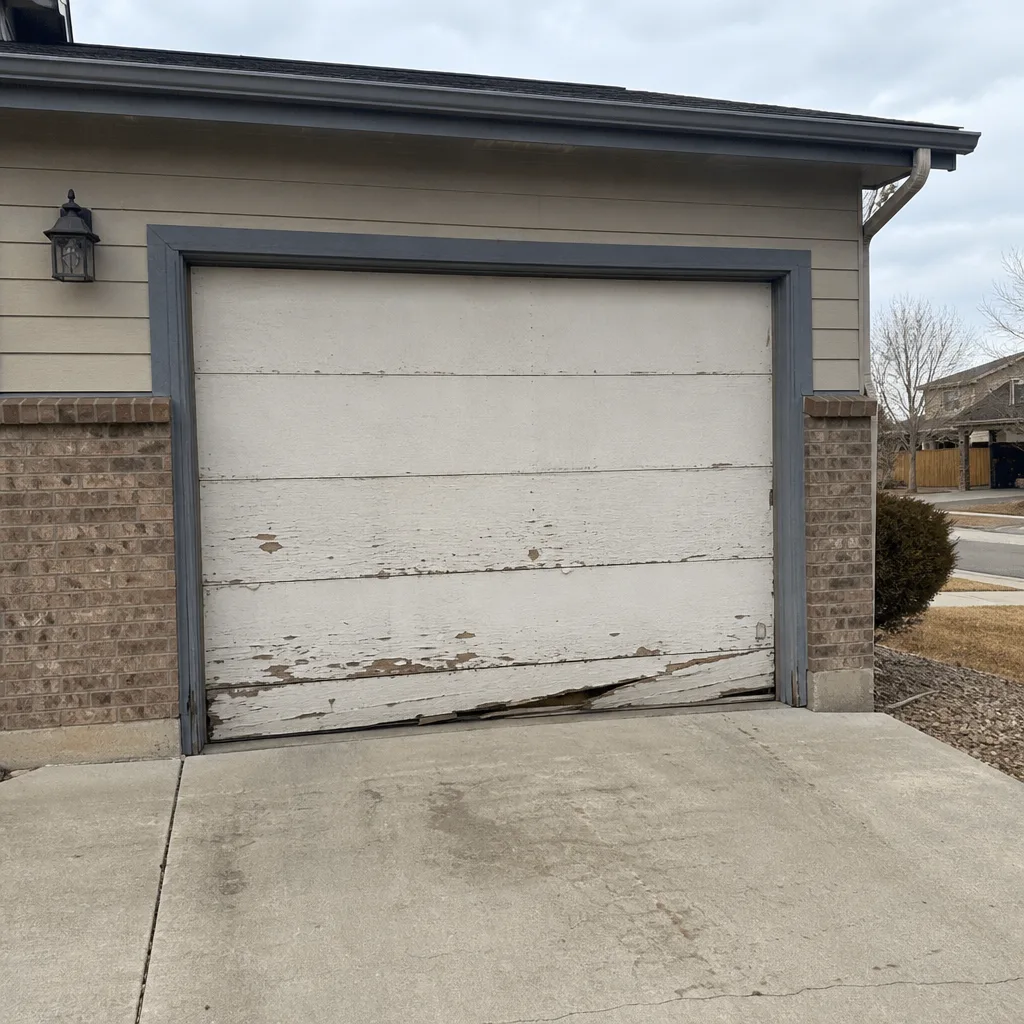 Before
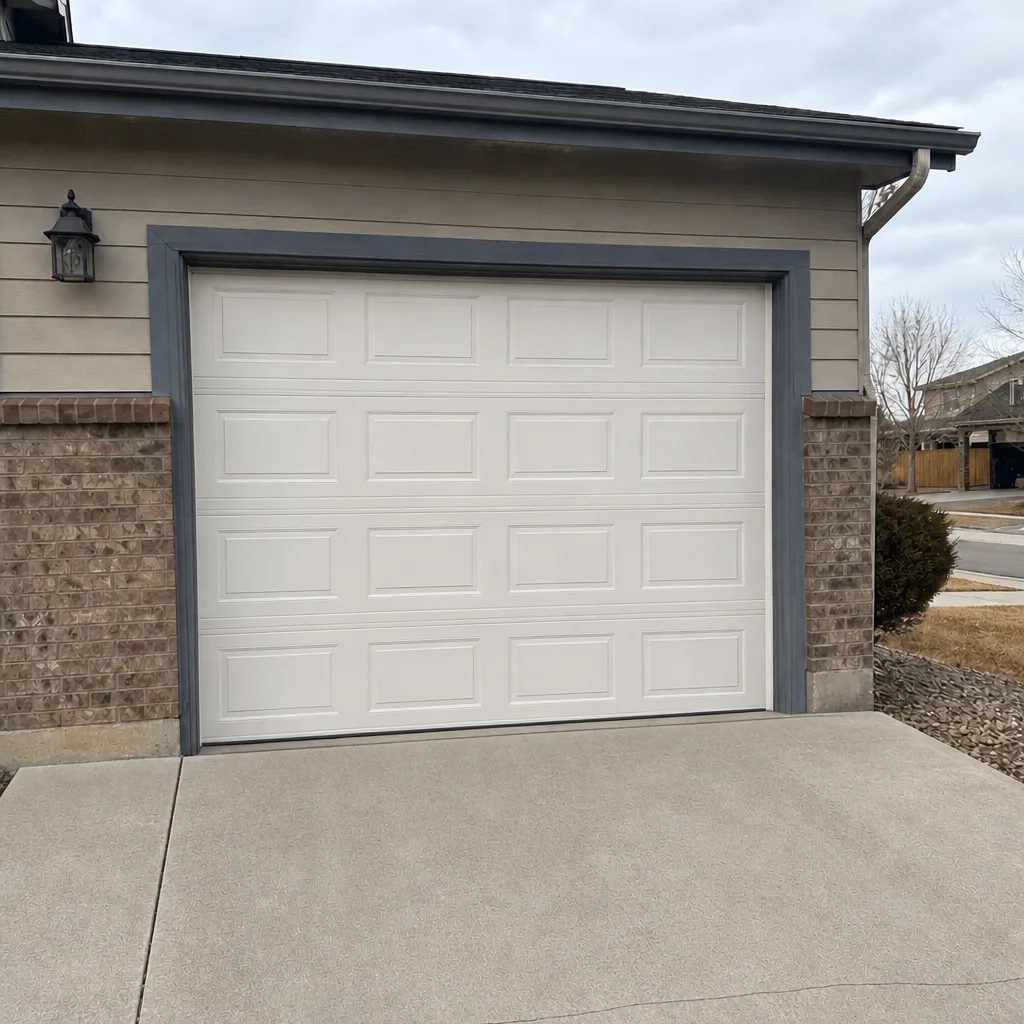 After
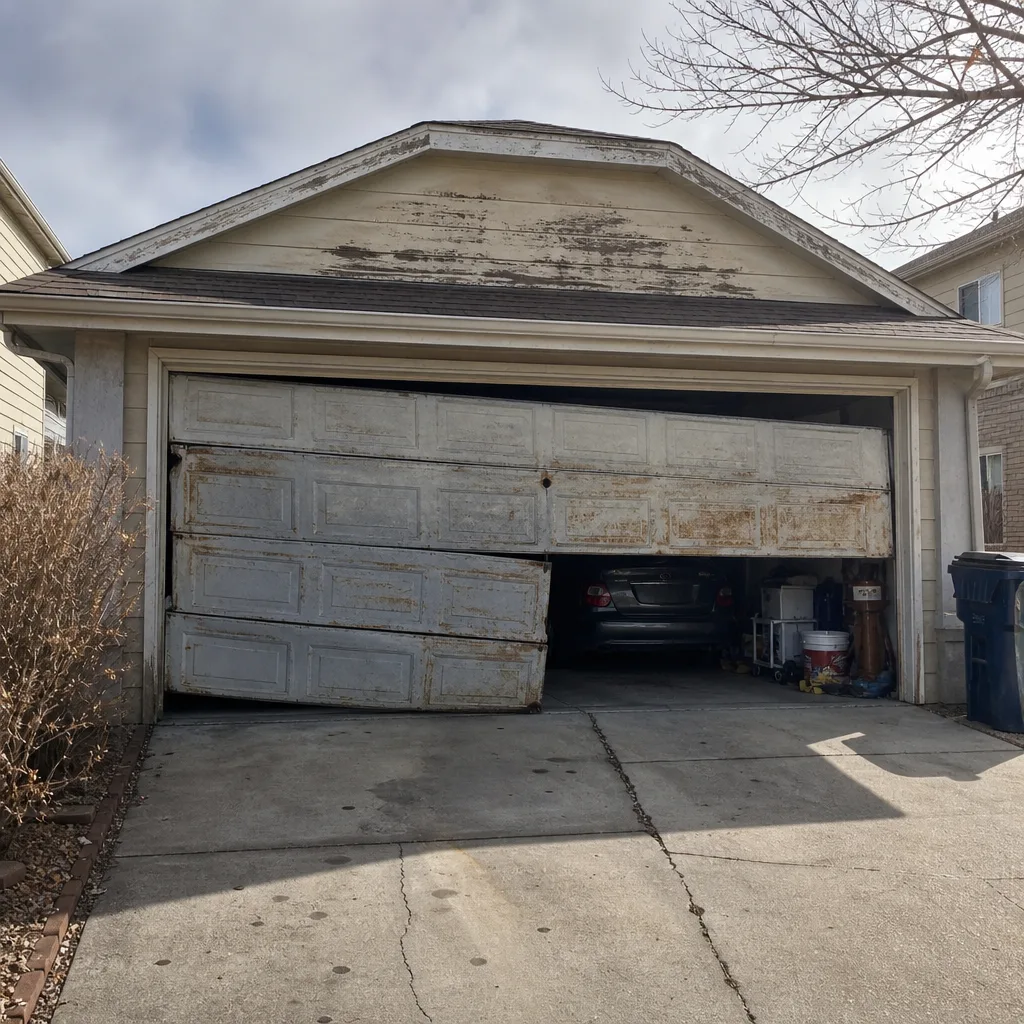 Before
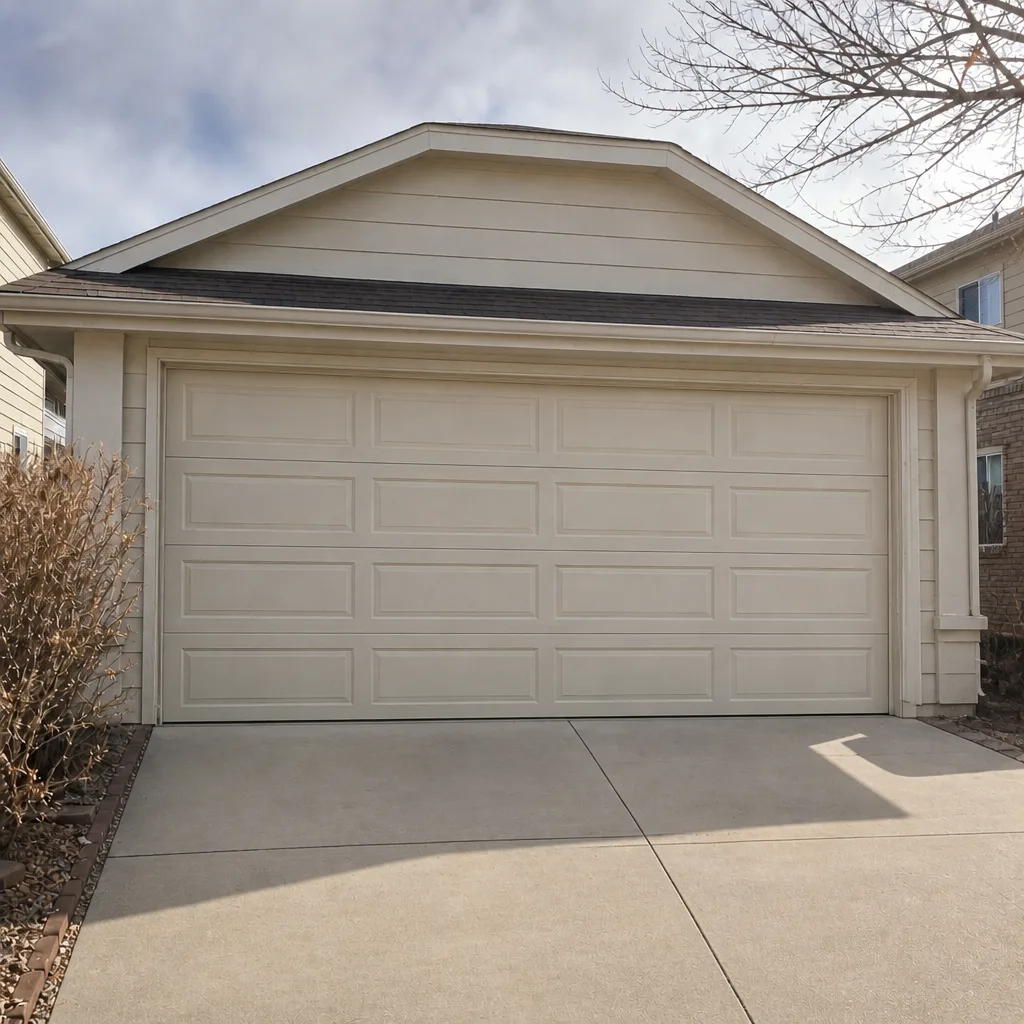 After
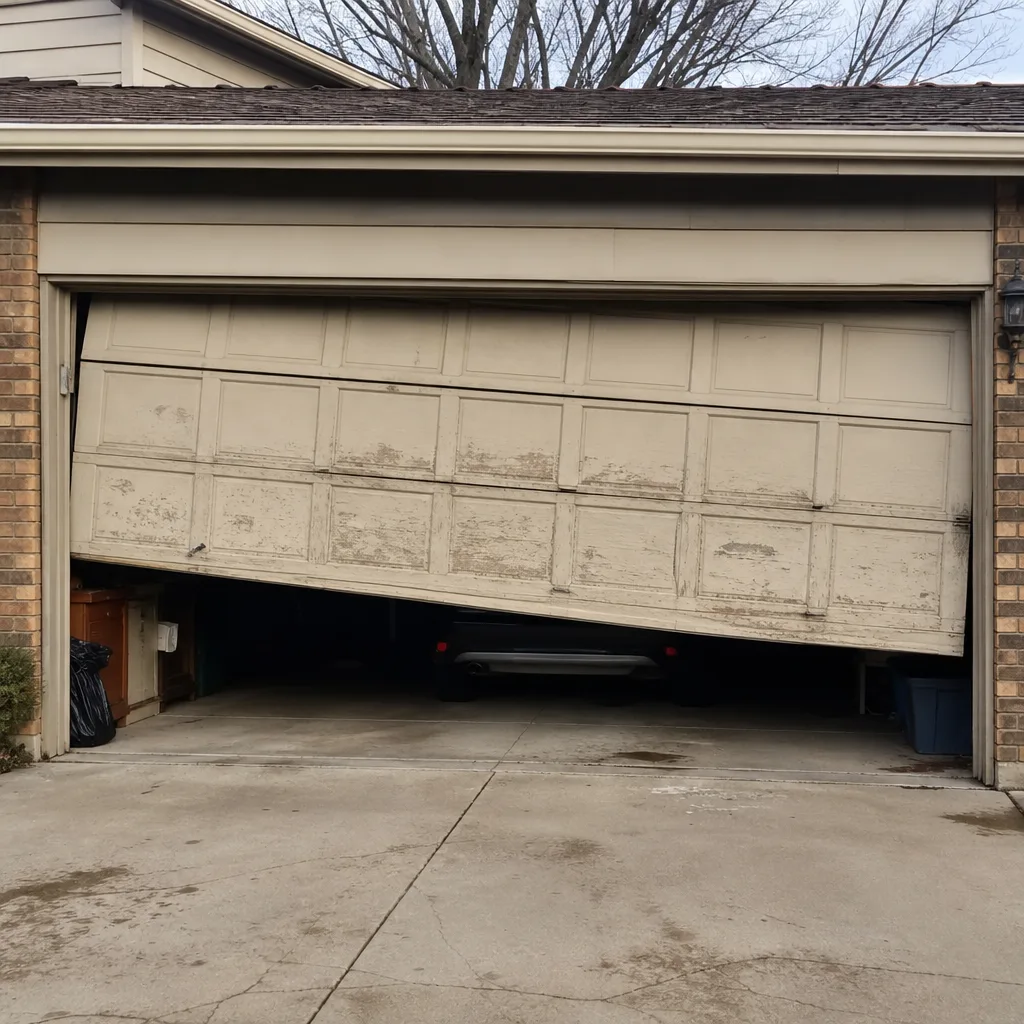 Before
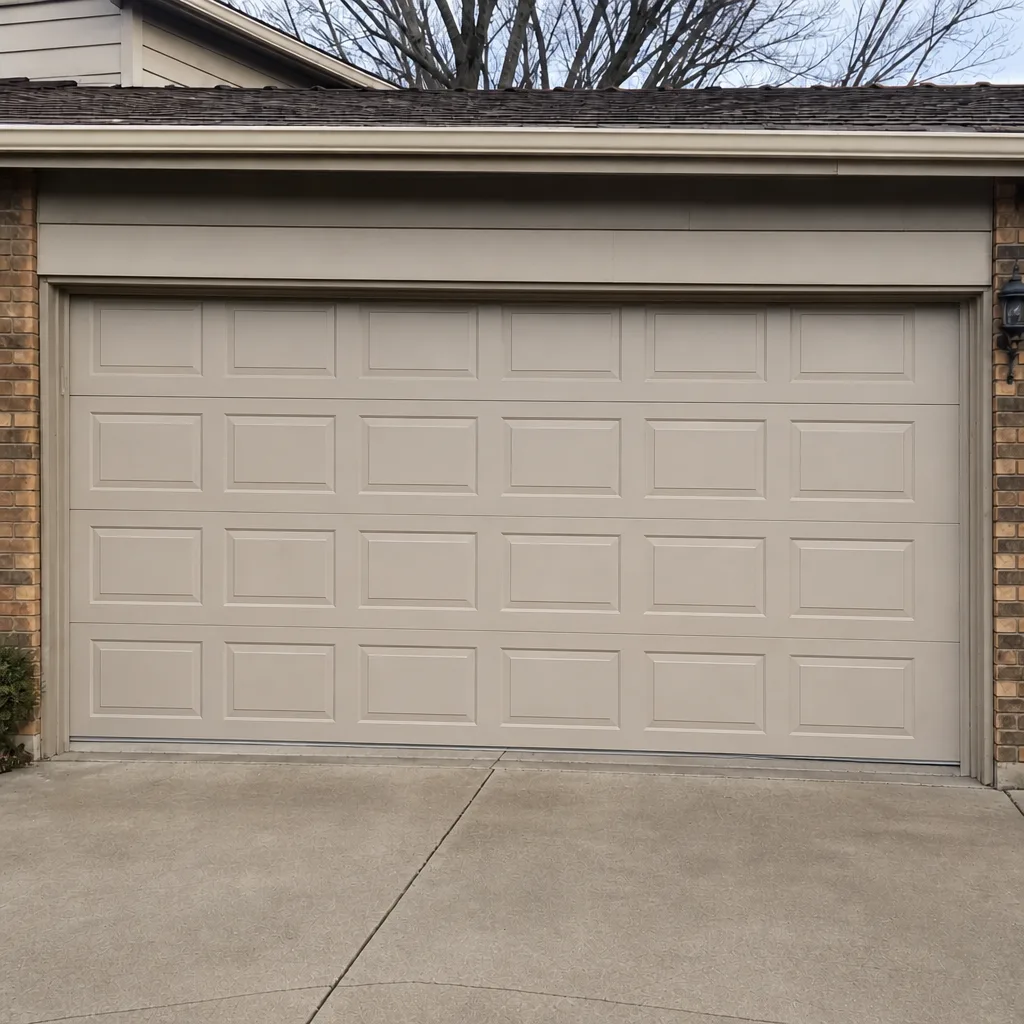 After
When to Call a Professional
Call a professional for anything involving springs, cables, track realignment, panel replacement, or a door that’s operating unpredictably. Those aren’t judgment calls; they’re the category of work where DIY carries real risk and a technician’s visit is worth it. Also call if you’re getting the runaround from your own checks: if the noise continues after lubrication, if the door reverses with no visible obstruction, or if the opener runs but the door doesn’t move and you’ve already checked the disconnect. Those symptoms tend to point at a specific part, and diagnosis is faster with someone who knows the system.
The good news is that a planned repair is almost always cheaper and simpler than an emergency one. If you’re not sure whether a symptom is urgent, that call is the quickest way to find out.
Garage Door Repair Green Valley Ranch offers free estimates in Green Valley Ranch. Call (855) 337-1312. We answer 24/7. Fast dispatch from 7am to 7pm, Sunday through Friday. Our technicians have up to 15 years of experience, and we’re certified to work on eight major door and opener brands, including LiftMaster, Chamberlain, Craftsman, and Raynor.
Frequently Asked Questions
A single band of rust on one area of the torsion spring, combined with a slight hesitation before the door starts moving, is the most common pairing we see. The band tells you the metal is thinning where the spring will eventually fail, and the hesitation tells you it’s already losing tension. If you notice either one, get it inspected before it becomes a broken spring.
For a short time, yes, but you should get it checked soon. Grinding is usually worn rollers or dry bearings, and it’s repairable. What you don’t want to do is ignore it for weeks, because the extra load from grinding rollers wears down the springs and opener faster. Call (855) 337-1312 and we’ll help you figure out whether it’s urgent.
Almost always the safety sensors. A cobweb, a layer of dust, or direct sunlight on the sensor lens is enough to trigger the reversal. Check the sensor lenses first; if they’re clean and the reversal continues, the sensors or the opener’s logic board may need attention.
Spring repair is priced per job and set by the written estimate before any work starts, so the quote you agree to is the number you pay. A single spring and a matched pair aren’t the same job, and the price reflects which one your door needs. Call (855) 337-1312 for a free estimate.
It changes the pattern rather than the likelihood. The dry air and dust here mean lubrication matters more, and the day-to-night temperature swings loosen fasteners and stress hinges over time. Those aren’t reasons to expect failure; they’re reasons to keep the monthly check going.
Stop using the door and call for help. A door off its track can drop unexpectedly and is unsafe to operate or force back into place. Don’t try to lift or push it back by hand; a technician should secure the door and realign the track. Call (855) 337-1312 to schedule an inspection.
The Bottom Line
Garage doors fail loudly, but they almost always warn you first. A hesitation, a single rust band, a new grind, a door that reverses with nothing in the way: each is a signal that a specific part is telling you something. The trick is separating the warnings that give you a couple of weeks from the warnings that mean you stop using the door today. Know the difference, run the monthly check, and get a professional on the spring and cable problems rather than handling them yourself. Ten minutes of attention a month is the easiest way to avoid the surprise repair you didn’t plan for, and it’s the same routine whether you’re in Green Valley Ranch or anywhere else in the metro. When something needs a look, we’re set up to work on the brand you already have, from a broken spring to a full installation.
Call (855) 337-1312 for a free estimate. We answer 24/7. Fast dispatch from 7am to 7pm, Sunday through Friday.
Written by the team at Garage Door Repair Green Valley Ranch.